Cleaning Textile Wastewater: Our Successful Bangladesh Pilot


“I’m turning my dream of cleaning water into reality.”
That was the message I sent to my family in Chile as my plane took off for Bangladesh. Even though I felt like I had been waiting for that moment my entire life — and I was traveling with the best team I could have asked for — I couldn’t help but feel overwhelmed with emotion.
Cleaning water has been my life’s mission since the day I understood how access — or the lack of it — can profoundly shape people’s quality of life. And there I was, sitting on that plane, preparing to land in one of the countries with the highest levels of wastewater production in the world (nearly 20% of the global total), ready to give my all to help clean and reuse this precious resource.
As soon as I arrived in Dhaka, I met with our "superstar" Technology Director, Ezequiel, who had arrived the day before to assemble our pilot unit. I asked immediately: “So how hard is this pilot going to be to pull off?”. He smiled and said, “Tomorrow, you’ll see!”
The next day, Nahian, Ezequiel, and I headed to the factory. It was massive. I’ve visited many factories in my life, but this one had a scale that commanded respect. But what surprised me most wasn’t its size — it was the incredible support we received from the moment we stepped through the door: from the brand partner team to the plant workers, we immediately felt the warmth and generosity of the Bangladeshi people.

From the very first moment, we felt we weren’t alone. Our hosts shared their delicious local food, opened their culture to us, and somehow made all the pressure feel lighter. That humanity made all the difference. ধন্যবাদ (Dhonnobad).
The challenge of executing the pilot itself was significant. The project scope included the treatment of six different wastewater streams from three textile plants, each as large and complex as the host facility. This wasn’t a controlled test. It was real production water we were seeing for the first time, from real factories, with real expectations behind each test. And as we kicked off our pilot testing, teams from each plant gathered around, carefully watching every step of our process.
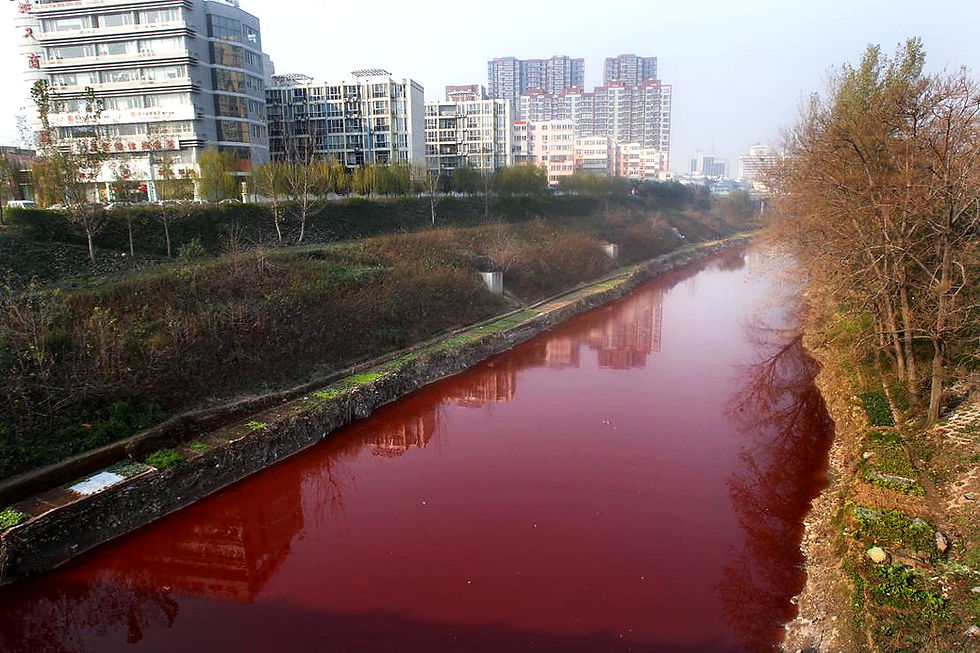
We proudly stood next to our pilot unit and explained how electro-oxidation works, how, under the right operational conditions, we can break down color and contaminants at the molecular level. No magic. Just electrochemistry, engineering, and years of stubborn persistence behind every electrode. Not too long after these introductory remarks, the water started to change colour. Slowly at first. Almost shyly. The dark, heavily dyed water began to lose its intensity. The color softened. The opacity lifted. What once looked impossible started to show promise.
At that moment, our goal wasn’t just to meet a discharge limit. It was to demonstrate something much more significant: that textile mills can clean and reuse their wastewater on-site, sustainably, scalably and cost effectively. You could feel the shift in the room. This wasn’t an experiment anymore. It was hard hitting technological innovation at work!
One by one, we treated each stream. Each time the water moved from dark and complex to visibly clean, it felt like scoring a goal in extra time. A quiet celebration. Glimmers of hope and excitement exchanged between teammates. A deep breath.
Before we knew it, the scoreboard read: Viridis 6, Wastewater 0.

And while we were showcasing our technology to this captive audience, we were also in a state of deep learning. Our hosts helped us deeply understand their water-related processes: costs, sustainability targets, operational priorities, and how our technology can best integrate into their operations with minimal disruption. I felt like a kid in a toy store — but this time, with a real possibility of transforming an industry.
The pilot performed even better than I had dreamed. And today, it makes me incredibly happy to continue working with these partners as we define where our next unit will be installed.
This experience reminded me of something powerful: the world cannot be improved alone. It takes a global village to make dreams real. Your dreams are never only yours, they belong to everyone who believes in them and chooses to make them their own.
I’m grateful to the Viridis team for carrying this mission close to their hearts. To our partners, who genuinely want to protect our precious water sources. And to every person who, in one way or another, has supported Viridis along this journey.
There is still so much to do.
And I have no doubt — we will do it.